Smart Inventory: Auto-Update QR Menus When Items Run Out
Stop overbooking with outdated menus. Learn how smart inventory systems sync your digital QR menu instantly when stock runs low, saving time and reducing waste.
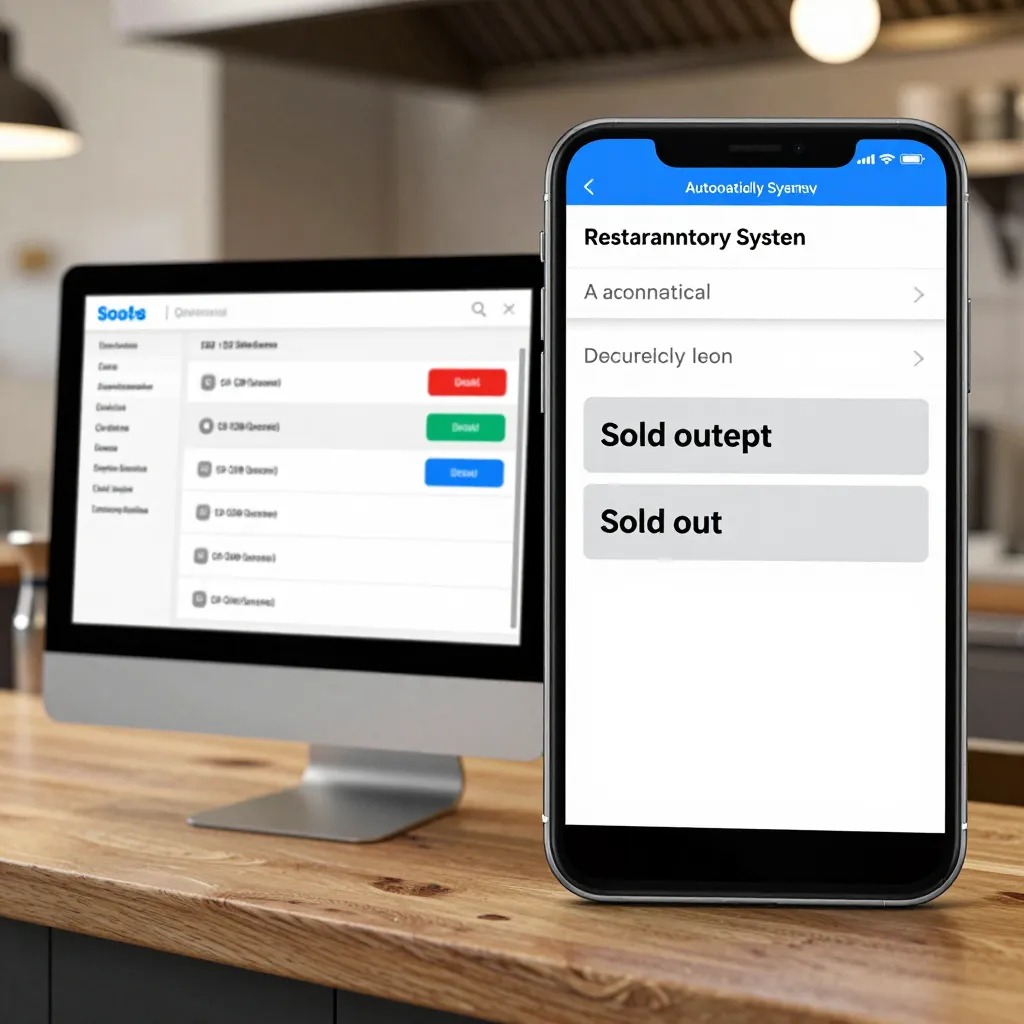
Why Manual Menu Updates Are a Recipe for Disaster
Imagine a busy Saturday evening. Your restaurant is packed, the kitchen is humming, and a server approaches a table with a glowing tablet. The guest asks for your signature truffle risotto. The server glances at the digital QR menu, smiles, and says, "Coming right up." Moments later, the kitchen erupts in chaos. The chef had been out of truffle oil for two days, but the digital menu hadn't changed. The customer is now waiting for a dish that cannot be made.
This scenario is all too common in the restaurant industry. Studies suggest that up to 40% of restaurants experience significant revenue loss due to menu discrepancies. When a physical menu sits on a table, it is static. It cannot speak to the reality of your kitchen floor. However, when you rely on a digital QR menu, the stakes are higher because the information is perceived as real-time and authoritative.
Traditional management relies on a lagging indicator system. You notice the stock is low on Tuesday, you update the spreadsheet on Wednesday, and you print new laminated menus or manually edit a PDF on Thursday. By the time the change is visible to the customer, you have already overpromised on Friday and Saturday. This delay creates friction in your operations, leading to angry customers, kitchen stress, and wasted food.
The core issue is the disconnect between your Point of Sale (POS) inventory and your customer-facing interface. Without a smart system, this disconnect is inevitable. You are essentially running two different businesses: the one you think you have (based on your menu) and the one you actually have (based on your stock). Bridging this gap is the first step toward operational excellence.
The Power of Real-Time Synchronization
Smart inventory management transforms your digital menu from a static brochure into a living, breathing extension of your kitchen operations. This technology works by creating a direct pipeline between your stock levels and your QR code menu. When an item in your inventory drops below a certain threshold, or when it hits zero, the system automatically flags the item for removal or modification.
This process is not just about deleting a line item; it is about maintaining the integrity of your brand promise. Consider a cafe that runs out of a specific almond milk batch. In a manual system, this might go unnoticed for hours. In a smart system, the moment the last carton is scanned into the POS, the menu updates. The customer sees a gentle notification: "Our almond milk is currently out of stock, but we have oat milk available." This transparency builds trust.
According to industry data, restaurants that utilize automated menu management see a 20% reduction in food waste. This is because they stop ordering ingredients they cannot sell. If you know you can't make the spicy tuna roll because the wasabi is gone, you don't order it. You don't prep it. You save money and protect the environment.
Furthermore, real-time synchronization ensures universal access. Whether a customer is using a smartphone, a tablet, or a laptop, they are looking at the same accurate data. This consistency is crucial for dietary needs. If a customer has a severe allergy to a specific nut, and that nut is no longer in the kitchen, the digital menu must reflect that immediately. A smart system ensures that no one is served a dish containing an allergen simply because the menu hasn't been updated in three days.
Operational Efficiency: Freeing Your Team to Focus on Hospitality
One of the most significant benefits of auto-updating QR menus is the reduction of administrative burden. Your kitchen staff and front-of-house team are under immense pressure. They are focused on plating food, managing tables, and ensuring customer satisfaction. The last thing they need is a manager chasing them to update a menu item because the supplier ran out of basil.
With smart inventory, your team can focus on what matters most: the guest experience. When the system handles the data entry and the logic of the updates, your staff can spend their energy on training, hospitality, and problem-solving. This shift in focus directly correlates with higher customer satisfaction scores (CSAT).
Think about the workflow of a standard shift. Without automation, a manager might spend 15 to 20 minutes every morning checking stock levels and manually adjusting a digital file or app settings. Over a month, that adds up to nearly 10 hours of non-revenue generating time. In a smart system, that time is reclaimed. The manager can use those 10 hours to analyze sales data, train new hires, or engage with the community.
Moreover, this efficiency scales with your business. As you add more menu items or expand to multiple locations, the complexity of manual updates grows exponentially. A single error in a multi-location setup can lead to brand inconsistency. Smart inventory systems centralize this control, allowing you to manage stock and menu status from a single dashboard, regardless of how many locations you operate.
Strategic Insights: Data-Driven Decision Making
Inventory management is not just about tracking what you have; it is about understanding what you sell and how you can optimize your offerings. Smart inventory systems collect valuable data that goes beyond simple stock counts. They track velocityhow fast items are sellingand correlate that with stock depletion rates.
For example, you might notice that a specific craft beer is selling out faster than you can restock it, leading to frequent "out of stock" flags. This data tells you that you need to adjust your par levels or negotiate a faster delivery schedule with your supplier. Conversely, if a dish is flagged as "out of stock" frequently, it might indicate that the recipe is inefficient or that the portion size is too large, causing you to run out of key ingredients too quickly.
This level of insight allows for proactive rather than reactive management. Instead of guessing what to order next week, you base your purchasing decisions on actual consumption patterns and real-time stock visibility. This reduces the risk of over-ordering perishable goods, which is a leading cause of food waste and financial loss.
Consider the concept of dynamic pricing or special promotions. If you have excess inventory of a specific ingredient, you could automatically adjust the menu to highlight dishes using that ingredient, perhaps offering a small discount to move stock before it spoils. This agility is only possible when your menu is directly tied to your inventory reality.
Building Trust Through Radical Transparency
In an era where consumers are increasingly conscious of sustainability and ethical sourcing, transparency is a powerful tool for building brand loyalty. When your digital menu accurately reflects your inventory, you are signaling to your customers that you are honest and reliable. You are not trying to sell them something you cannot deliver.
Transparency also extends to sustainability. By eliminating the need for physical menus that sit in a drawer for weeks, you reduce paper waste. But more importantly, by accurately tracking inventory, you reduce food waste. Every piece of food that is thrown away because it was ordered but couldn't be made is a failure of inventory management. Smart systems ensure that you only make what you can sell.
Furthermore, this honesty fosters a deeper connection with your guests. When a customer sees that you have gone out of their way to source local ingredients, but that ingredient is currently unavailable, they understand the reality of the supply chain. They appreciate the notification that allows them to choose an alternative. This interaction turns a potential negative (an unavailable item) into a positive (a conversation about alternatives and values).
Ultimately, the goal of any business is to create value. Smart inventory management creates value by ensuring that every dollar spent on ingredients translates into a sold meal. It creates value by ensuring that every customer interaction is positive and frictionless. It creates value by aligning your operations with your values of sustainability and honesty.
Conclusion: Embrace the Future of Menu Management
The landscape of restaurant management is evolving rapidly. Technology that once seemed like a luxury is now becoming a necessity for survival and growth. Smart inventory systems that auto-update your QR menu when items run out are no longer just a "nice-to-have" feature; they are a fundamental component of modern operations.
By adopting this technology, you are not just updating a list of food items; you are upgrading your entire business model. You are reducing waste, saving time, improving customer satisfaction, and building a brand that stands for transparency and reliability. The transition might seem daunting at first, but the benefits are immediate and profound.
At upQR, we believe that technology should serve the restaurant, not complicate it. Our platform is designed to be intuitive, powerful, and aligned with the core values of sustainability and honesty. We provide the tools you need to manage your inventory seamlessly, ensuring that your digital menu is always a true reflection of what is available in your kitchen. Don't let outdated menus hold your business back. Embrace smart inventory today and watch your operations transform.
Related Posts
Ready to create your digital menu?
Create your QR menu in minutes and reach your customers in any language.