Build an App vs QR Menu: Pros, Cons & Best Choice
Should you invest in a custom restaurant app or a QR menu? We compare costs, maintenance, and customer experience to help you choose wisely.
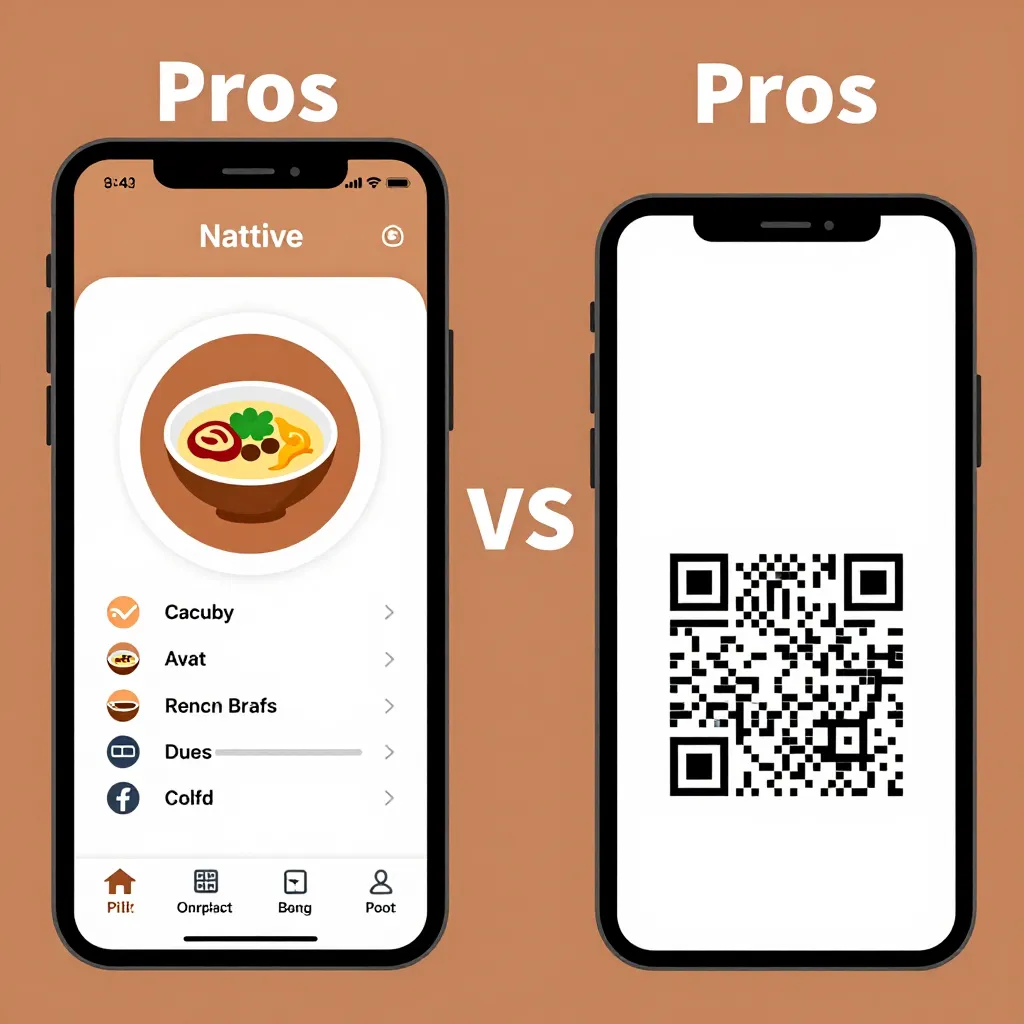
Choosing the Right Digital Dining Solution
As a restaurant owner or cafe manager, one of your most critical decisions involves how customers access your menu. The digital transformation of the food service industry has presented two primary paths: developing a custom mobile application or implementing a digital QR code menu system. While both solutions aim to streamline operations and enhance the customer experience, they differ significantly in cost, complexity, and long-term value.
According to recent industry data, over 70% of consumers now prefer digital menus over paper ones, yet less than 15% of restaurants have invested in a proprietary app. This gap highlights a crucial reality: building an app is often unnecessary for the average establishment, while a QR menu offers immediate accessibility. Your choice should align with your specific business model, budget, and operational goals.
Understanding the Custom App Development Model
Building a custom restaurant app involves creating a standalone software product that customers download from the Apple App Store or Google Play Store. This approach offers deep customization and brand control but comes with substantial barriers to entry. The initial development cost can range from $15,000 to over $100,000, depending on features like table booking, loyalty programs, and online ordering integration.
Beyond the upfront investment, the ongoing maintenance is a significant factor. Apps require regular updates to comply with operating system changes, security patches, and feature additions. If you do not update the app, it may become incompatible with newer devices, leading to a poor user experience. Furthermore, customer acquisition for apps is notoriously difficult. Users must actively search for, download, and install your app, a friction point that often results in low adoption rates unless you have a massive marketing budget to drive downloads.
Consider the example of a small bistro with a seasonal menu. If they build an app, they must update the code or use a backend to change menu items every week. This is operationally heavy. In contrast, a digital menu can be updated instantly by a manager via a dashboard, ensuring that customers always see the current offerings, including daily specials and allergen information. This agility is essential for modern food service, where menus change frequently based on supply chain availability.
The Efficiency and Accessibility of QR Menus
QR (Quick Response) menu systems offer a streamlined alternative that prioritizes speed, accessibility, and cost-efficiency. A QR menu is simply a code displayed on a table or a digital stand that customers scan with their smartphones to access a web-based menu. This technology leverages the ubiquity of smartphones, meaning no download is required. Customers can access your menu instantly, regardless of whether they use an iPhone or an Android device.
The cost structure of a QR menu is vastly different from app development. While a custom app requires a large capital expenditure, a QR menu solution typically involves a monthly subscription fee or a low one-time setup cost. For instance, platforms like upQR allow businesses to launch a professional digital menu for a fraction of the cost of an app, often under $50 per month. This includes features like online ordering, payment processing, and nutritional information display.
From an operational standpoint, QR menus excel in transparency and honesty. They allow you to display detailed ingredient lists, allergen warnings, and pricing without the need for complex database management. If a customer has a specific dietary restriction, such as gluten intolerance, they can easily filter the menu or see clear labeling. This transparency builds trust, a core value for modern diners who are increasingly conscious of what they eat. A custom app might achieve similar transparency, but it requires significant engineering effort to implement robust filtering systems effectively.
Key Comparison: Cost, Maintenance, and User Experience
To make an informed decision, it is essential to weigh the pros and cons of each approach across three critical dimensions: financial investment, operational maintenance, and customer experience.
Financial Investment
Custom App: High initial cost ($15k+), ongoing maintenance fees, and paid marketing to drive downloads. The return on investment (ROI) takes years to materialize.
QR Menu: Low initial cost, predictable monthly subscription, and no need for expensive user acquisition campaigns since customers find you via QR codes on tables.
Operational Maintenance
Custom App: Requires dedicated developers or agencies for updates. Menu changes might require technical intervention or complex admin tools.
QR Menu: Managed via a simple dashboard. Changes to prices, descriptions, or photos are instant. No compatibility issues with new OS versions.
User Experience
Custom App: High friction. Users must download and register. Good for loyalty programs but poor for one-time visitors.
QR Menu: Zero friction. Instant access. Ideal for walk-ins, tourists, and casual diners who do not want to clutter their phone with unused apps.
Industry statistics suggest that while apps are popular for chains like Starbucks or McDonald's, independent restaurants and cafes see higher engagement with QR menus. The friction of app installation often leads to a drop-off rate of over 80% for new users. A QR menu eliminates this barrier, ensuring that every customer who sits at your table can immediately see what you offer.
When a Custom App Might Make Sense
While QR menus are the superior choice for most establishments, there are specific scenarios where a custom app is justified. The primary use case is for large restaurant chains with thousands of locations and a massive customer base. For these entities, the brand recognition is strong enough that customers are willing to download an app for exclusive rewards, early access to new locations, or integrated loyalty points.
Another scenario is for businesses heavily reliant on delivery and takeout. If your primary revenue stream comes from online ordering rather than dine-in service, an app can provide a seamless integration with delivery partners and offer a branded experience for delivery drivers. However, even in this case, a Progressive Web App (PWA) or a robust QR menu with ordering capabilities often suffices without the need for a full native app.
For independent restaurants, the opportunity cost of building an app is too high. The time and money spent on development could be better invested in high-quality food, marketing, or staff training. The goal of digital transformation should be to serve the customer better, not to create another digital hurdle. A QR menu achieves this by being ubiquitous, fast, and honest.
Maximizing Value with upQR
For restaurants seeking the best of both worldsprofessional presentation without the heavy lift of app developmentupQR provides a robust solution. Our platform is designed around the core values of transparency, sustainability, and universal access. We eliminate paper waste, supporting the environment, while ensuring that every customer, regardless of language or dietary need, can navigate your menu with confidence.
upQR allows you to display honest, accurate information with no hidden fees. You can update your menu in real-time, reflecting the day's ingredients or special offers instantly. Our system supports online ordering and payment processing, streamlining your operations and reducing wait times. By choosing a QR menu solution like upQR, you focus on what matters most: providing a delicious dining experience.
Whether you are a busy cafe serving coffee to commuters or a fine dining restaurant hosting intimate gatherings, a digital QR menu offers the flexibility to grow with your business. It ensures that your menu is always up to date, your pricing is clear, and your commitment to sustainability is evident. Don't let the complexity of app development distract you from your culinary craft. Embrace the simplicity and efficiency of a QR menu to connect with your customers in a way that is honest, accessible, and profitable.
Related Posts
Ready to create your digital menu?
Create your QR menu in minutes and reach your customers in any language.
