
Airport Restaurants & QR Ordering for Travelers
Discover how digital QR menus streamline service for time-pressed passengers. Learn the benefits of transparency, speed, and sustainability for airport food operators.
The Unique Challenge of Airport Dining
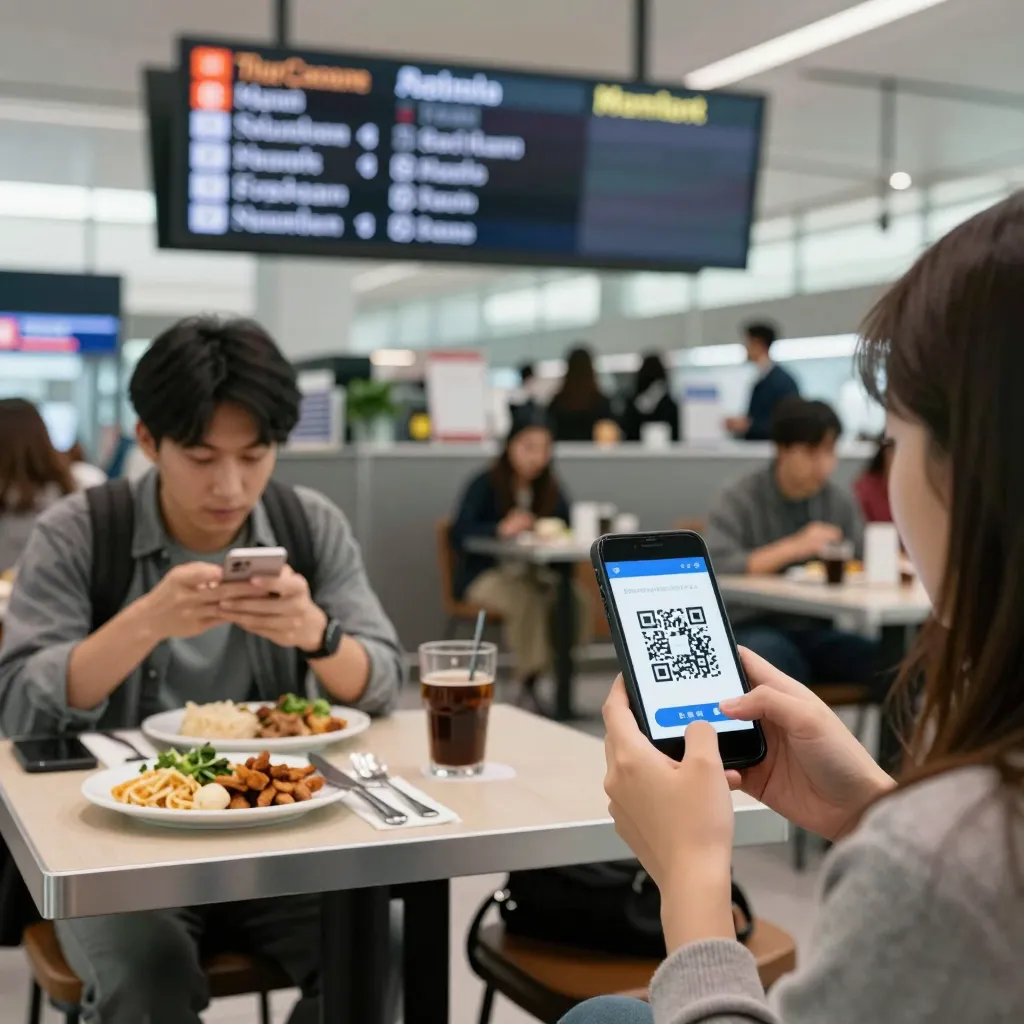
Airport restaurants operate under a unique set of constraints that differ significantly from traditional dining establishments. The primary customer demographic consists of travelers who are often time-pressed, fatigued from long journeys, and looking for a quick solution to hunger. For a restaurant owner in this environment, the goal is not merely to serve food, but to manage high-volume throughput efficiently while maintaining a high standard of customer satisfaction. The traditional paper menu, while simple, introduces friction points that can lead to lost revenue and frustrated guests.
Consider the scenario of a passenger with a tight connection time. They approach the counter, scan the paper menu, and wait for the staff to explain options, prices, and dietary restrictions. If the menu is crowded or the staff is busy, the interaction drags on. Every minute lost in ordering is a minute the seat remains empty, representing a direct loss of potential revenue. Furthermore, the perception of slow service in an airport can negatively impact the overall travel experience, leading to poor reviews and reduced customer loyalty.
Transitioning to a digital QR code system addresses these friction points immediately. By placing a QR code prominently at the entrance or on the table, you empower the customer to take control of their experience instantly. This shift transforms the ordering process from a dependency on staff availability to an on-demand digital interaction. For airport operators, this means maximizing table turnover rates and ensuring that every minute of a passenger's layover is utilized effectively. The technology allows for a seamless flow where customers can browse, customize, and order at their own pace, reducing the bottleneck at the counter and allowing staff to focus on food preparation and delivery rather than manual order taking.
Speed and Efficiency: The Core Advantage
Speed is the currency of the airport dining world. A digital QR menu system drastically reduces the time required to place an order. Studies in the restaurant industry suggest that digital ordering can reduce order placement time by up to 40% compared to manual methods. This statistic is transformative for airport operators. When a traveler scans a code, they are immediately presented with a menu that loads in seconds, eliminating the need to wait for a staff member to approach the table or for a counter agent to look up items on a POS system.
The efficiency gains extend beyond just the initial scan. Digital menus allow for pre-selection of items, meaning the kitchen receives the order the moment the customer confirms. This synchronization between the front of house and the kitchen is critical in high-traffic environments. In a traditional setup, staff must relay orders verbally or via paper tickets, which can lead to errors like wrong sides, incorrect modifiers, or missed specials. With a digital system, the order is transmitted directly to the kitchen display system, ensuring accuracy and speed. For an airport cafe manager, this reliability is essential; a traveler waiting for a hot meal after a long flight deserves it without delay.
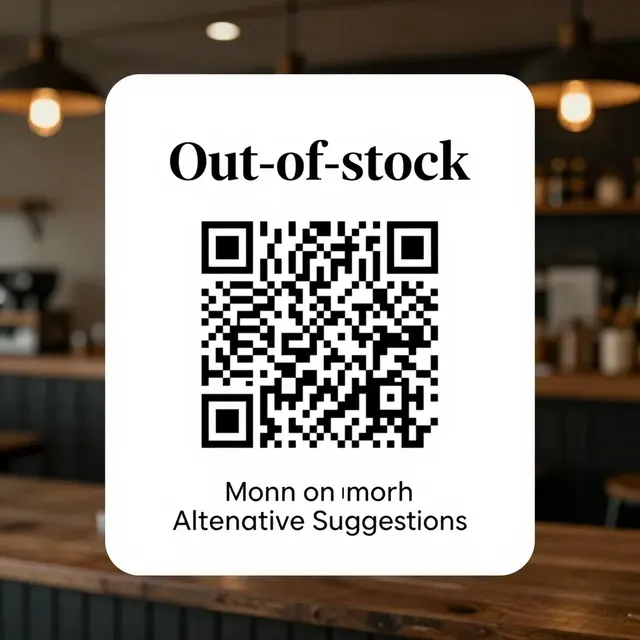
Furthermore, the digital interface allows for dynamic pricing and real-time inventory updates. If a specific ingredient runs out or a flight delay causes a surge in demand for certain items, the menu can be updated instantly. In a physical airport setting, printing new menus to reflect these changes is a logistical nightmare involving waste and delay. A QR code system ensures that every customer sees the most current information, preventing the embarrassment of ordering an item that is no longer available. This level of operational agility is a competitive advantage that paper menus simply cannot offer. It allows restaurant owners to react to real-time airport conditions, such as weather delays or flight cancellations, by adjusting menu offerings or promotions on the fly.
Transparency and Universal Access
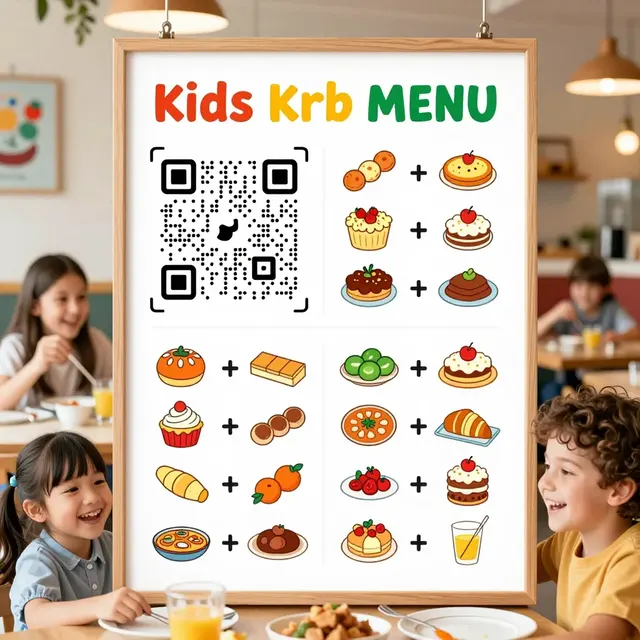
Transparency is a core value that resonates deeply with modern travelers, who are increasingly conscious of what they are consuming. Airport restaurants often face scrutiny regarding allergens, hidden ingredients, and nutritional content. A digital QR menu provides a canvas for complete honesty. Owners can expand on menu descriptions, providing detailed ingredient lists, allergen warnings, and nutritional facts directly on the screen. This eliminates the ambiguity of a small print on a paper card and builds trust with the customer. For a traveler with a specific dietary restriction, such as a gluten intolerance or a nut allergy, seeing this information upfront is a safety net that paper menus cannot provide.
Universal access is another pillar of the upQR mission that is particularly relevant in the global context of airports. Airports are melting pots of cultures, languages, and dietary habits. A traveler from Tokyo may not understand English menu descriptions, while a traveler from Brazil might be looking for specific spice levels. A well-designed digital menu can include multi-language support, allowing users to switch between English, Spanish, Mandarin, or Japanese instantly. This ensures that every passenger, regardless of their native tongue, knows exactly what they are ordering.
Moreover, visual accessibility is a critical component of universal design. Many airports strive to be inclusive for travelers with visual impairments. While screen readers are not yet standard on all public kiosks, a mobile-first QR menu ensures that the content is accessible to those who can use their personal devices. Digital menus can also feature high-contrast modes and larger text options, accommodating travelers with visual challenges. By prioritizing these features, airport restaurants demonstrate a commitment to inclusivity, ensuring that the dining experience is available to everyone. This aligns with the industry trend towards sustainability and ethical business practices, where transparency and accessibility are not just nice-to-haves but essential expectations.
Sustainability and Cost Reduction
The aviation industry is under immense pressure to reduce its carbon footprint, and airport dining is a significant contributor to waste through single-use paper menus. Every day, thousands of paper menus are printed, distributed, and eventually discarded. This contributes to deforestation, ink pollution, and landfill waste. By switching to a digital QR menu system, airport restaurants can make a substantial environmental statement. A single QR code printed on a table or stand replaces hundreds of paper menus over the lifespan of the installation. This reduction in physical waste aligns with the growing demand from eco-conscious travelers who prefer to support businesses that prioritize sustainability.
Beyond environmental impact, the financial benefits of going digital are substantial. The cost of printing, storing, and replacing paper menus adds up quickly, especially in high-volume airport locations. Digital menus eliminate these recurring costs entirely. Additionally, they reduce the risk of errors associated with outdated menus. When a restaurant owner changes a price or adds a new dish, they do not need to reprint hundreds of cards. This saves money on materials and labor. For an airport operator managing multiple outlets, the cost savings can be reinvested into better food quality, improved staff training, or upgrading the dining environment.
The data on waste reduction is compelling. The restaurant industry estimates that paper waste accounts for a significant portion of a venue's total waste output. By adopting a digital-first approach, airport restaurants can claim a reduction in their operational carbon footprint. This is not just about saving trees; it is about signaling to the global community that the business is responsible and forward-thinking. Travelers today are more likely to choose a restaurant that aligns with their values, and sustainability is a key value for many. UpQR's platform facilitates this transition, making it easy for restaurant owners to adopt green practices without complex infrastructure changes.
Strategic Implementation for Airport Operators
Implementing a QR ordering system in an airport requires a strategic approach to ensure adoption and success. The first step is placement. The QR code must be visible and accessible before the customer even sits down. Placing the code on the table is standard, but adding a stand at the entrance can encourage scanning before the customer is seated, further reducing counter congestion. The design of the menu itself is crucial; it must be fast-loading, even on fluctuating airport Wi-Fi networks. A menu that takes more than a few seconds to load can frustrate a hungry traveler.
Content strategy is equally important. The menu should be concise yet informative. Use high-quality images to entice travelers, but keep descriptions clear and scannable. Highlight bestsellers and limited-time offers to guide decision-making for indecisive customers. Integration with loyalty programs is another key feature. If the airport's frequent flyer program or a local loyalty scheme can be linked to the QR menu, customers can earn points instantly, encouraging repeat visits even during short layovers.
Finally, staff training is vital. While the system is designed to reduce reliance on staff for order taking, employees still play a crucial role in upselling, answering questions, and handling exceptions. Staff should be trained to explain how the digital menu works to customers who might be hesitant to use their phones. The goal is to create a hybrid experience where technology handles the logistics, freeing staff to provide personalized hospitality. This balance ensures that the human element of service remains strong, even as the ordering process becomes fully digital. By following these implementation steps, airport restaurants can create a dining environment that is faster, more transparent, and more sustainable, ultimately providing a superior experience for time-pressed travelers.
Related Posts


Ready to create your digital menu?
Create your QR menu in minutes and reach your customers in any language.