Mastering QR Tipping: Setup Guide for Restaurants
Learn how to integrate seamless tipping into your digital menu. Boost tips, reduce friction, and create a transparent experience for every guest.
Why Tipping Dynamics Have Shifted in the Digital Age
The way customers tip has evolved alongside technology. Gone are the days of hurried scribbles on a napkin or fumbling with coins at the end of a meal. Today, digital menus offer a unique opportunity to streamline this process, ensuring that every server receives fair compensation for their hard work. For restaurant owners, understanding these dynamics is crucial for maintaining staff morale and customer satisfaction.
According to recent industry data, the average tip amount in the United States hovers around 18% to 20% of the pre-tax bill. However, friction in the tipping process can lead to lower tip percentages. When customers struggle to find a pen or have to calculate percentages mentally, they often tip less than they intend. By integrating a robust tipping system into your QR code digital menu, you remove these barriers, allowing guests to focus on enjoying their meal while ensuring their gratuities are handled with precision.
Furthermore, the transparency of digital payments aligns perfectly with modern consumer values. Guests appreciate knowing exactly where their money goes. A seamless tipping interface signals that the restaurant values its staff and respects the customer's time. This psychological shift can lead to a more positive dining experience, encouraging guests to return and recommend the establishment to friends and family.
Step-by-Step Guide to Configuring Tipping Options
Setting up tipping in your digital menu is a straightforward process that yields significant long-term benefits. The goal is to present customers with clear, flexible, and easy-to-use options that accommodate various tipping habits. Here is how you can configure your settings effectively:
Start by accessing your restaurant's dashboard within the upQR platform. Navigate to the payment or menu settings section, where you will find options for customizing the checkout experience. Look for the "Tipping" or "Gratuities" configuration. This is where you define the structure of your tipping interface.
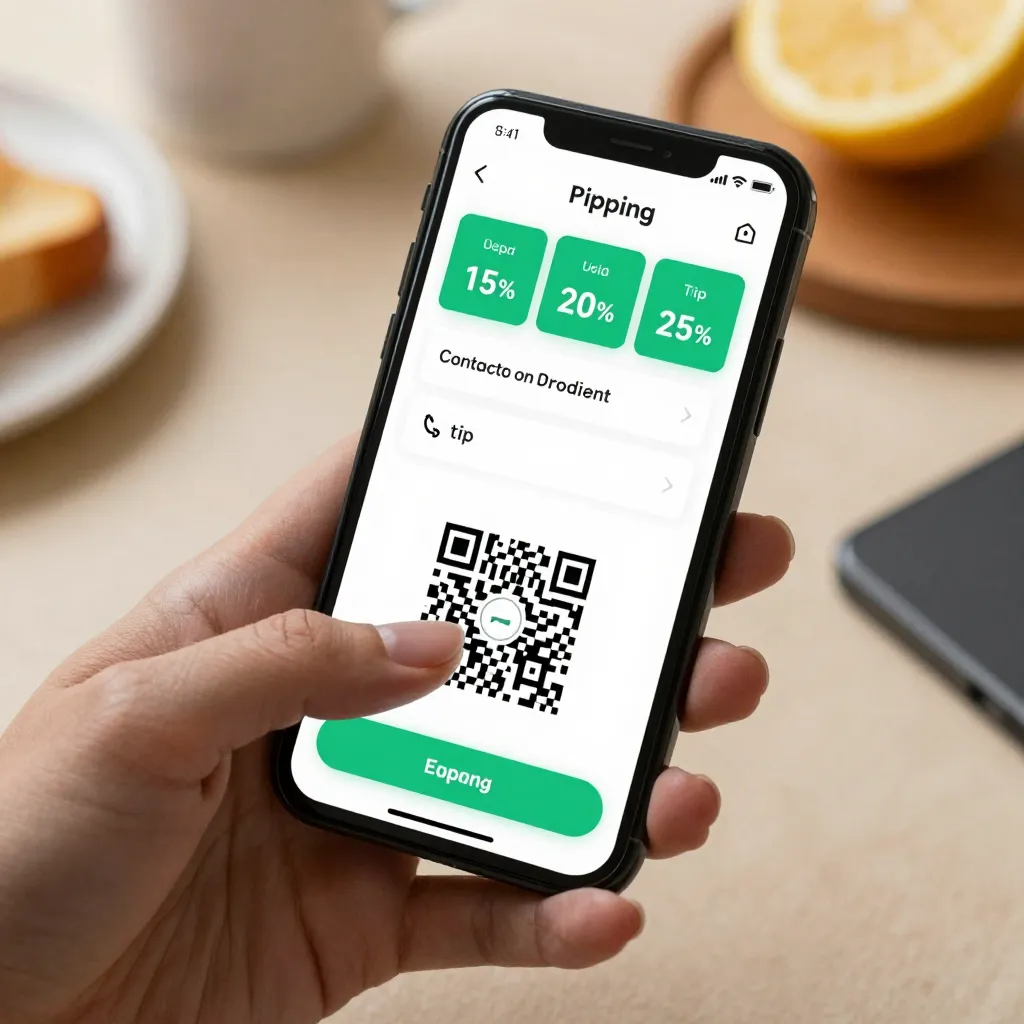
First, decide whether to offer fixed percentages or a range of custom amounts. Most successful restaurants opt for a hybrid approach. Offer standard percentages like 15%, 18%, 20%, and 25% as quick-select buttons. These cater to the majority of customers who prefer a set rate. However, it is equally important to include a "Custom Amount" option. This allows generous tippers to leave a higher percentage or a specific dollar amount, such as $10 or $20, without being constrained by the preset buttons. This flexibility respects the generosity of your guests while simplifying the process for those who want a standard rate.
Next, consider adding a text field for a personal note. Many customers enjoy leaving a message for their server alongside their tip. Ensure your system supports this feature, as it adds a personal touch that can make a server's day. When a guest writes "Great service!" or "Thank you for the recommendations," it reinforces positive behavior and boosts team spirit.
Finally, review your payment gateway settings to ensure that tips are calculated correctly on the final receipt. The total should clearly show the pre-tax amount, the tip amount, and the final total. Transparency here is key. If a customer sees a breakdown of charges, they are more likely to feel confident in their transaction and less likely to dispute the charge later.
Optimizing the User Experience for Maximum Tips
Just as important as the configuration is the user experience (UX) design of your tipping interface. A cluttered or confusing checkout screen can deter customers from tipping generously. The layout should be intuitive, requiring minimal clicks to complete the transaction.
Consider the order in which you present the tipping options. Research suggests that the "anchoring effect" plays a role in tipping behavior. If the first option presented is 15%, customers may perceive it as the standard. However, if you place 20% or 25% as the default or prominently displayed option, customers are statistically more likely to choose that higher percentage. You can achieve this by making the 20% button the pre-selected option or placing it in the center of the layout, drawing the eye immediately.
Visual design also matters. Use clear icons or emojis next to the percentage buttons to make them engaging. A smiley face next to 20% can subconsciously encourage generosity. Keep the background clean and ensure the tip buttons are large enough to tap easily, even on mobile devices with smaller screens. Many customers order from their phones; a responsive design is non-negotiable.
Another effective strategy is to offer a "Round Up" option. This allows customers to round their total to the nearest dollar or five dollars, with the difference automatically added as a tip. This is particularly popular among younger demographics who want to be quick but generous. It simplifies mental math and often results in higher tip percentages than fixed amounts.
Ensure that the payment gateway you use supports these features. Some older gateways only accept fixed tips, while modern processors like those integrated with upQR allow for dynamic fields. Check your processor's documentation to see what customization is available. If your current setup is rigid, consider upgrading to a more flexible solution that supports custom tips and notes.
The Impact of Transparent Tipping on Staff Morale
The benefits of a well-designed tipping system extend far beyond the customer's checkout screen; they directly impact the restaurant staff. In the hospitality industry, server income is often heavily reliant on tips. When the tipping process is seamless and transparent, servers feel valued and respected.
Imagine a scenario where a server works hard to provide excellent service, recommend wines, and ensure every guest leaves happy. If the customer then encounters a confusing tipping process or feels pressured to tip a specific amount, the server's reward feels diminished. Conversely, when a guest can easily leave a generous tip with a personal note, the server feels appreciated in real-time. This positive reinforcement loop can boost morale, reduce turnover, and improve overall service quality.
Moreover, transparent tipping builds trust between the restaurant and its guests. When customers see that their tips are handled fairly and go directly to the staff, they are more likely to view the restaurant as ethical and community-focused. This aligns with the core values of sustainability and honesty that define upQR. By eliminating hidden fees or confusing charges, you demonstrate integrity in every transaction.
Consider the implications for shift managers and owners. With a digital tipping system, you gain better visibility into your revenue streams. You can track tip averages, peak tipping times, and even identify which servers are receiving the most generous gratuities. This data can be used for performance reviews, scheduling bonuses, or training sessions. It transforms tip collection from a chaotic end-of-shift scramble into a managed, predictable part of business operations.
Furthermore, in an era where workers' rights and fair pay are under scrutiny, a restaurant that facilitates fair and easy tipping stands out as an employer of choice. Servers can take pride in working for an establishment that leverages technology to ensure they are compensated fairly. This pride often translates into better customer interactions, creating a virtuous cycle of excellence.
Addressing Common Challenges and FAQs
As you implement a tipping system, you may encounter questions or challenges. It is helpful to prepare answers for common inquiries to ensure smooth operations. One frequent question is, "Can I add a tip if I paid by card earlier?" If you use a digital menu with a QR code, the entire transaction, including the tip, can be added in a single step. This solves the problem of customers who forget to tip before leaving the restaurant. The digital menu acts as a final stop for all payments, ensuring nothing is missed.
Another concern is privacy. Customers may wonder if their tip amount or note is visible to others. Reassure guests that their transaction details are private and secure. The tip amount and note are only visible to the server and the restaurant management, not to other customers. This privacy encourages honesty and generosity without fear of judgment.
What about cash tips? While digital menus encourage cashless transactions for hygiene and speed, you should still accept cash. If a customer prefers to tip in cash, ensure they know they can add a cash tip to their digital bill or leave it in a designated envelope. Some restaurants offer a "Cash Tip" button that instructs the guest to place cash in a specific drawer or envelope. This hybrid approach accommodates all preferences.
Finally, consider the language barrier. If you serve a diverse clientele, ensure your tipping interface is available in multiple languages. UpQR's platform often supports multi-language menus. If a customer speaks Spanish or French, they should see tipping options in their native language. This inclusivity removes language barriers that might otherwise discourage tipping or cause confusion.
Conclusion: Elevating Your Service with upQR
Implementing a sophisticated tipping system is more than a technical upgrade; it is a statement of your restaurant's commitment to quality service and fair compensation. By configuring your digital menu to offer flexible, transparent, and user-friendly tipping options, you create a dining environment where both guests and staff thrive. The shift from traditional, often chaotic tipping methods to a streamlined digital process reduces friction, increases tip amounts, and fosters a culture of appreciation.
upQR provides the tools necessary to achieve this seamless integration. With our platform, you can customize tipping options, add personal notes, and ensure that every transaction is handled with the honesty and transparency your business values. Whether you are a bustling cafe or a fine dining establishment, upQR helps you adapt to the modern dining landscape. Embrace the technology that supports your team and delights your guests. Ready to transform your tipping experience? Contact us today to learn more about how upQR can elevate your restaurant's operations and customer satisfaction.
Related Posts

Ready to create your digital menu?
Create your QR menu in minutes and reach your customers in any language.