QR Menu Best Practices for Food Courts and Malls
Discover essential QR menu strategies for food courts. Learn how digital menus reduce waste, speed up service, and improve the customer experience in high-traffic mall environments.
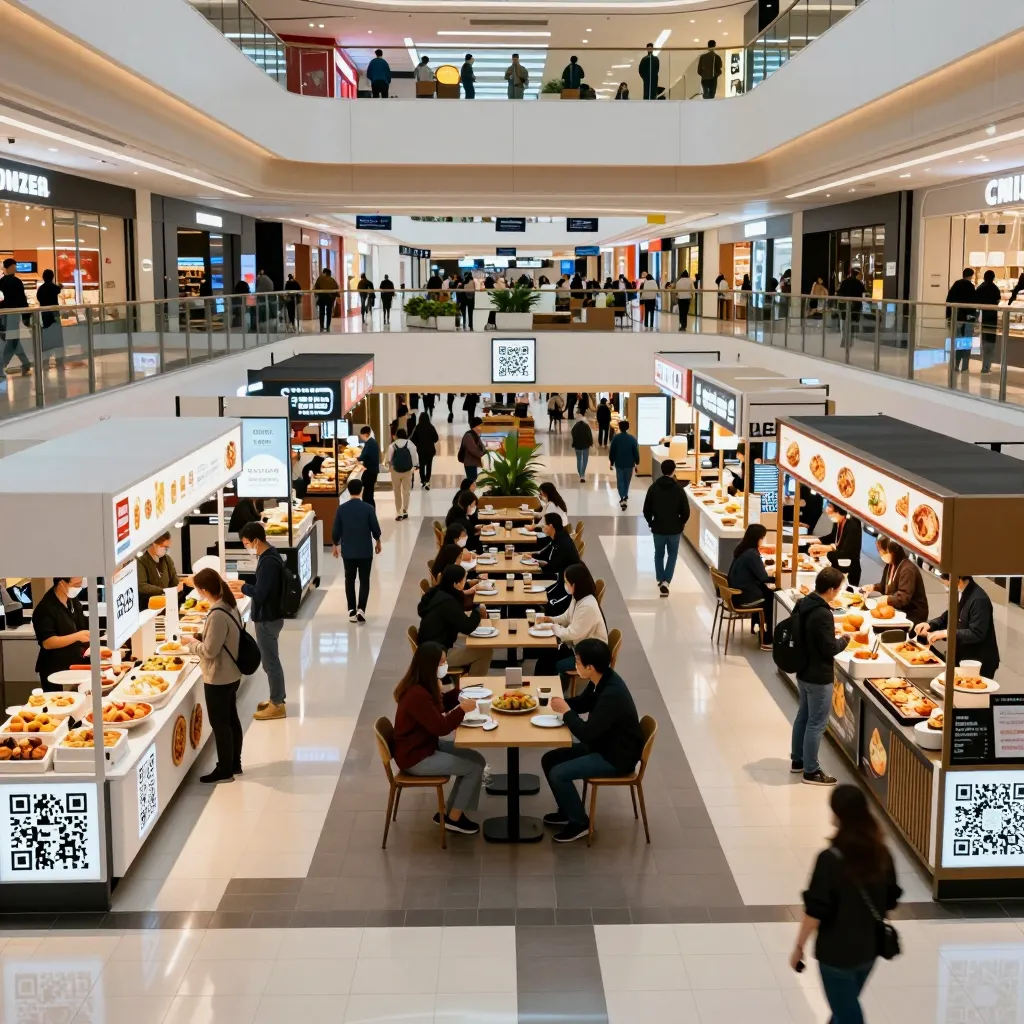
Transforming High-Traffic Food Courts with Digital Menus
Food courts and mall restaurants operate in a unique environment defined by speed, variety, and high foot traffic. Unlike a cozy bistro where diners take their time, mall patrons often grab a quick bite while walking between stores or rushing to an appointment. In this setting, traditional paper menus become a bottleneck, cluttering tables and slowing down service. Digital QR menus offer a streamlined solution that aligns perfectly with the fast-paced nature of food court dining. By adopting a digital-first approach, restaurant owners can significantly reduce wait times, eliminate the need for constant menu reprinting, and provide a seamless experience that keeps customers moving through the venue efficiently.
The shift to digital is not just about replacing paper; it is about optimizing the customer journey. When a customer scans a code, they are immediately presented with a clear, up-to-date list of options. This immediacy reduces the friction of ordering, allowing staff to focus on food preparation rather than taking orders or managing paper inventory. For mall operators, this means a cleaner environment with less paper waste, directly supporting sustainability goals that are increasingly important to modern consumers. A digital menu also ensures that pricing and availability are always accurate, preventing the frustration of a customer finding an item on a paper menu that is out of stock or has a price increase.
Designing for Speed and Clarity in Busy Environments
Time is the most valuable commodity in a food court. The design of your QR menu must reflect this urgency. A cluttered, text-heavy menu will cause hesitation, leading to longer order times and potentially lost sales. To combat this, your digital menu should prioritize visual hierarchy and speed of access. Key elements like bestsellers, daily specials, and clear pricing should be placed at the top of the page or easily accessible via navigation buttons. Customers should be able to find what they want within three seconds of opening the menu.
Visual appeal is crucial, but it must be balanced with readability. High-quality images of food can stimulate appetite and help customers make decisions quickly, but these images must load instantly on mobile devices. Slow loading times are the enemy of a food court experience; if a menu takes more than two seconds to load, customers may abandon the process and head to a competitor nearby. Ensure your menu is optimized for various screen sizes, from older smartphones to the latest models, and that text remains legible even in bright outdoor mall lighting. Furthermore, categorize items logically. Instead of a long, scrolling list, group items by meal type (e.g., Burgers, Wraps, Sides) so customers can scan down the list quickly without scrolling endlessly. This structure respects the customer's time and reduces cognitive load, making the ordering process feel effortless.
Building Trust Through Radical Transparency
Transparency is a core value that resonates deeply with modern diners, especially in environments where trust can be fragile. In a food court, customers often have dietary restrictions or allergies but may not feel comfortable asking every question. A digital menu provides the perfect platform for radical transparency. Unlike paper menus that might hide allergens in fine print, a QR menu can feature prominent tags for gluten-free, vegan, nut-free, and dairy-free options. These tags should be color-coded or clearly labeled to ensure that anyone, regardless of language or literacy level, can understand their options instantly.
Beyond dietary needs, transparency extends to ingredients and sourcing. Customers increasingly want to know what they are eating. Your menu should include detailed ingredient lists and clear allergen warnings. This honesty builds trust and reduces the anxiety of dining out for those with health concerns. Additionally, be transparent about pricing. Hidden fees or confusing cost breakdowns can lead to negative reviews and a loss of reputation. Display the final price clearly, including taxes and service charges if applicable, so there are no surprises at the register. If you offer customization, such as removing cheese or adding extra sauce, clearly indicate any associated costs. This level of detail shows that you respect the customer's intelligence and right to know, fostering a loyal customer base that values integrity over marketing fluff.
Leveraging Data to Optimize Operations and Marketing
One of the most significant advantages of a digital QR menu is the ability to gather valuable data. Paper menus are static; they tell you nothing about customer preferences. A digital menu, however, can track which items are most viewed, how long customers spend on each page, and which items are frequently added to the cart but never ordered. This data is a goldmine for restaurant owners and mall operators looking to refine their offerings.
Use this data to identify underperforming items. If a specific dish is rarely ordered, consider rethinking the recipe, the presentation, or the description. Conversely, if an item is consistently popular, highlight it on the homepage or offer it as a "chef's recommendation" to encourage even more sales. You can also analyze peak ordering times to adjust staffing levels, ensuring that you have enough cashiers ready during rush hours and not overstaffed during slow periods. This operational efficiency not only saves money but also improves the quality of service. Furthermore, the data can inform marketing strategies. If you notice a surge in vegan orders, you might decide to run a promotion on plant-based items or introduce new vegan specials to capitalize on the trend. This agility allows you to respond to market demands in real-time, keeping your menu relevant and competitive.
Enhancing Accessibility and Inclusivity for All Diners
A food court should be a place where everyone feels welcome, regardless of their abilities or background. Digital menus offer unparalleled opportunities to enhance accessibility, which is often overlooked in traditional settings. For customers with visual impairments, a digital menu can be fully compatible with screen readers like VoiceOver or TalkBack. By structuring your menu with proper HTML tags and alt text for images, you ensure that visually impaired customers can navigate the menu independently and receive audio descriptions of dishes. This inclusivity is a powerful statement of your brand's values and can expand your customer base to include those who might otherwise struggle to dine out.
Language barriers are another significant challenge in international malls or diverse neighborhoods. A digital menu can easily support multiple languages. Customers can switch between English, Spanish, Mandarin, or other local languages with a single tap, ensuring that everyone understands the menu options and can make informed choices. This feature not only improves the dining experience for international visitors but also helps them feel more comfortable and confident in your establishment. Additionally, consider including nutritional information, calorie counts, and macronutrient breakdowns. These details are essential for health-conscious diners and can be easily toggled on or off depending on user preference. By prioritizing accessibility and inclusivity, you demonstrate a commitment to serving your entire community, reinforcing the brand values of honesty and care that define upQR.
Conclusion
Implementing a QR menu in a food court or mall restaurant is more than a technological upgrade; it is a strategic move that enhances efficiency, transparency, and inclusivity. By designing a menu that loads fast, offers clear transparency on ingredients and pricing, and leverages data to improve operations, restaurant owners can create a superior dining experience that stands out in a crowded market. The shift to digital also supports sustainability by eliminating paper waste and ensures that every customer, regardless of ability or language, can enjoy a meal with confidence. At upQR, we believe in these core principles and provide the tools needed to make this transition seamless. Our platform is built to help you manage your digital presence with honesty and accuracy, ensuring that your restaurant not only survives but thrives in the dynamic environment of a modern food court. Embrace the future of dining today and turn your food court location into a model of efficiency and customer care.
Related Posts
Ready to create your digital menu?
Create your QR menu in minutes and reach your customers in any language.
