QR Menus Without Internet: Offline Solutions Explained
Discover how QR code menus function in areas with poor connectivity. Learn about offline caching, local storage, and hybrid models to keep your customers satisfied.
Why Connectivity Matters for Digital Dining
For modern restaurants and cafes, a digital menu is no longer a luxury; it is a fundamental operational necessity. It streamlines ordering, reduces waste, and provides transparency regarding ingredients and pricing. However, a common concern among food service professionals is reliability. What happens when the internet connection drops, or when a customer is in a basement with weak signal?
According to recent industry reports, approximately 15% of rural and semi-rural areas in many regions experience intermittent connectivity issues that can disrupt digital services. For a restaurant owner, a customer trying to view a menu without loading images or fetching prices is a lost sale and a negative brand experience. This is where the technology behind upQR becomes critical. A robust digital menu system does not rely solely on a live connection; it is designed to function seamlessly even when the network is unstable or completely absent.
Understanding how these offline solutions work is essential for maintaining operational continuity. By leveraging local caching and static hosting, a QR menu ensures that the customer experience remains uninterrupted, regardless of the external network environment. This reliability is a core component of the upQR mission to provide honest, accessible, and universal access to dining information.
The Architecture of Offline-Ready QR Menus
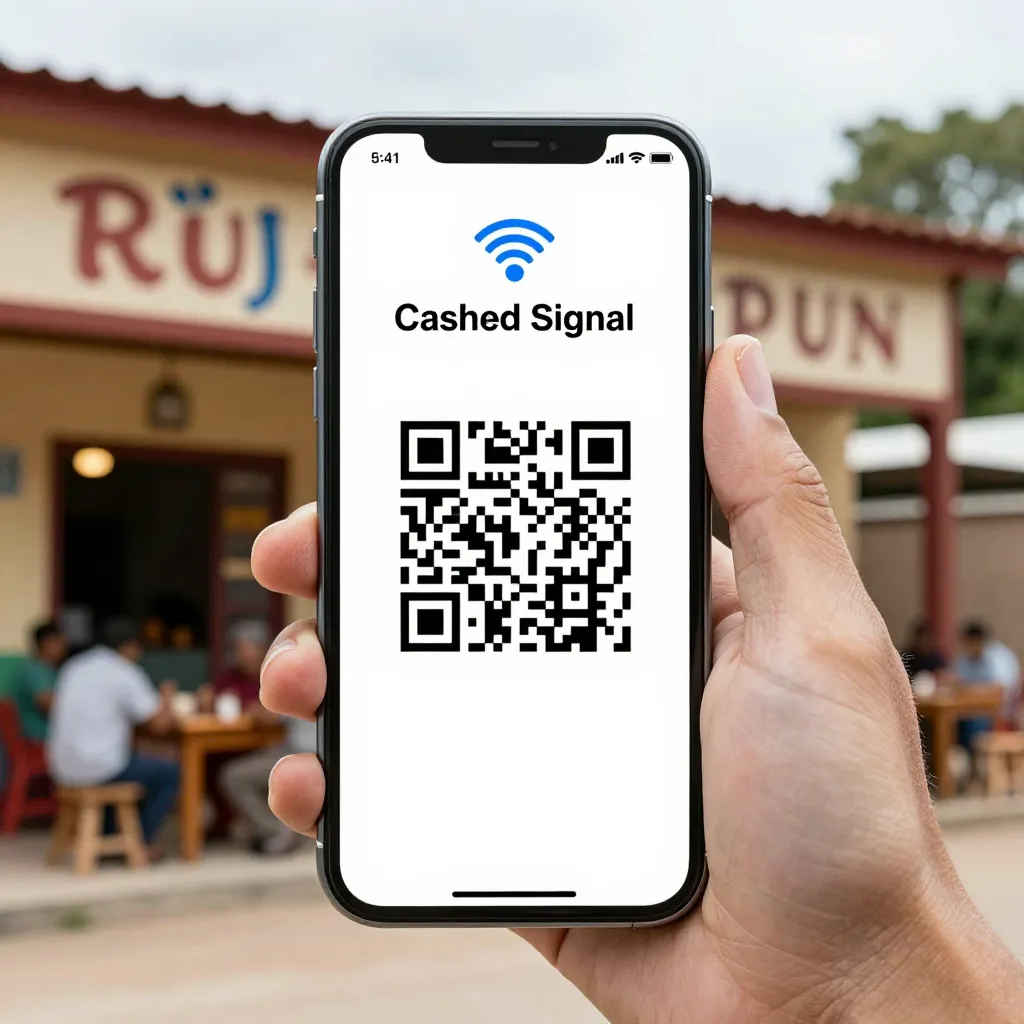
The concept of an "offline" QR menu might seem counterintuitive at first, as QR codes are digital triggers. However, the mechanism relies on how the web browser handles data after the initial scan. When a customer scans a QR code with their smartphone, the device downloads the menu page. Modern web technologies allow this page to be stored locally on the device's cache or hard drive.
Once the data is cached, the browser can serve the content from the local storage rather than fetching it from the server every time the page is refreshed. This is similar to how a website saves images and scripts to load faster on subsequent visits. In the context of upQR, this architecture is built-in by default. The system prioritizes speed and reliability, ensuring that the first load might require a connection, but subsequent interactionslike clicking on a dish to see ingredients or adding an item to the cartwork instantly without needing to ping the server.
This is particularly useful for customers who have mobile data caps or are in areas with expensive, slow data plans. They can view the entire menu, including high-resolution photos and detailed descriptions, on their first visit. Even if they leave the restaurant and return later with no signal, they can still navigate the menu if they have previously cached the page. This feature transforms the digital menu from a fragile dependency on the internet into a resilient tool that supports the restaurant's goals of transparency and universal access.
Implementing Static QR Codes for Permanent Offline Access
One of the most effective strategies for ensuring offline functionality is the use of static QR codes. Unlike dynamic QR codes, which redirect to a URL that can change and often require a verification step that relies on a live connection, static QR codes point directly to a specific, permanent web address. When paired with a robust hosting solution like upQR, these codes facilitate a "download once, use forever" experience.
Here is how the process works in practice: A customer scans the static code. The browser renders the menu page. The system detects that the user is on a limited connection or prefers to save data. It then offers to cache the menu locally. Once cached, the menu becomes a local file accessible via the browser's history or offline mode. This is distinct from simply having a PDF on a phone; it is an interactive digital experience that remains functional.
Restaurants can also employ a hybrid approach. They can host the menu on a local server or a low-bandwidth subdomain that is specifically optimized for offline viewing. While upQR primarily uses cloud-based architecture for ease of management, the principles of static linking ensure that the content is delivered efficiently. If a customer's internet cuts out mid-order, the interface does not freeze. The cart remains active, and the checkout process can often complete using stored data, pending a brief connection to finalize the transaction. This level of redundancy is what separates a basic PDF link from a professional, enterprise-grade digital menu system.
Optimizing Content for Low-Bandwidth Environments
Even with offline capabilities, the way content is delivered matters significantly. A menu loaded with uncompressed 4K images and heavy JavaScript frameworks will consume data quickly and may fail to load on older devices. To address this, upQR and similar platforms utilize smart compression techniques. Images are automatically resized and compressed without losing the quality needed for customers to identify dishes.
Furthermore, the code structure is optimized to load critical elements first. The price list, allergen information, and dish names are prioritized. Visuals load as bandwidth permits. This strategy ensures that even on a 2G connection, the essential informationwhat you are eating and how much it costsis visible immediately. This aligns perfectly with the value of transparency; customers should never be forced to wait or struggle to see the details they need to make an informed decision.
Another optimization involves the use of text-based fallbacks. If images fail to load due to severe connectivity issues, the menu gracefully degrades to show text descriptions. While less visually appealing, this ensures that the core function of the menuproviding accurate informationremains intact. This is a crucial aspect of universal access, ensuring that customers with older smartphones or in remote areas are not excluded from the dining experience.
Real-World Scenarios and Operational Benefits
Consider the scenario of a popular outdoor cafe located in a valley where cellular towers have poor coverage. During a summer afternoon, the signal fluctuates wildly. Without an offline-ready system, customers would experience frustration as images fail to load, and the ordering system would time out. With an offline-capable QR menu, the experience is seamless. The menu loads quickly on the initial connection, and subsequent navigation is instantaneous.
Another example is a food truck operating in a large city with dense concrete structures that block signals. Inside the truck, the WiFi might be spotty. By utilizing a cached menu system, the truck owner ensures that every customer, regardless of their signal strength, gets the full experience. This reliability builds trust. Customers appreciate that the restaurant has thought about their experience and prioritized their ability to order food without technical hurdles.
From an operational standpoint, this technology reduces the need for staff to constantly troubleshoot connectivity issues. It also minimizes the risk of order errors caused by timeouts. When a customer can complete their order even with a flickering connection, the kitchen receives accurate orders more frequently, and the staff can focus on food quality and hospitality rather than IT support. This efficiency contributes to the overall sustainability of the business, as fewer resources are wasted on resolving technical complaints.
Ensuring Data Security and Privacy Offline
A common misconception is that offline modes compromise security. However, a well-designed system like upQR maintains high security standards even when operating in offline or cached modes. The data collected during the offline session is encrypted and stored locally. When the connection is restored, the system securely uploads the order to the central dashboard.
Transparency is key here. Customers are often concerned about where their data goes. An offline-capable system can be configured to explain this process clearly within the app interface. It assures users that their personal information and payment details are protected, even when the device is not connected to the internet. This honesty regarding data handling reinforces the brand's commitment to integrity. It shows that the restaurant values the customer's privacy as much as their convenience, a principle that resonates deeply with modern diners who are increasingly aware of digital privacy issues.
In summary, the ability to function in poor internet areas is not just a technical feature; it is a strategic advantage. It demonstrates a commitment to inclusivity, ensuring that no customer is left out due to infrastructure limitations. By leveraging caching, static codes, and optimized content delivery, restaurants can guarantee a consistent, high-quality dining experience. This reliability supports the broader mission of digital dining: to make food information accessible, honest, and transparent for everyone, everywhere.
Related Posts

Ready to create your digital menu?
Create your QR menu in minutes and reach your customers in any language.
